Milkan Display: A Bold Typeface for High-Impact Visual Design
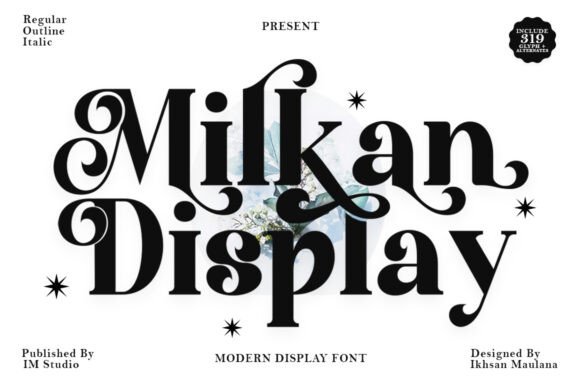
In the landscape of digital and print design, typography serves as the primary vehicle for tone, hierarchy, and brand identity. Among the myriad of typefaces available to designers, display fonts occupy a specific niche: they are designed to be read at large sizes, prioritizing aesthetic impact over extended legibility. Milkan Display is a font that has carved out a distinct space within this category. Characterized by its cool, bold, and thick letterforms, it offers a visual weight that commands attention without relying on excessive ornamentation. For professionals ranging from wedding planners to startup founders, understanding the specific utility and limitations of Milkan Display is essential for making informed typographic choices.
This analysis examines Milkan Display not merely as a decorative asset, but as a functional tool in a designer’s toolkit. We will explore its structural characteristics, ideal use cases, and practical considerations for integration into various design workflows.
Visual Characteristics and Structural Integrity
The defining feature of Milkan Display is its substantial stroke weight. Unlike standard sans-serif or serif fonts that balance readability with elegance across multiple sizes, Milkan is engineered for dominance. The letters are thick, geometric, and possess a modern, almost industrial rigidity. This "cool" aesthetic refers to its detached, sophisticated demeanor—it does not attempt to be warm or playful; rather, it aims for authority and clarity.
From a technical standpoint, the consistency of the stroke width is notable. In many bold display fonts, inconsistencies arise when letters are scaled down or used in tight kerning pairs. Milkan maintains a uniform presence, which contributes to its stability on the page. The terminals (the ends of strokes) are generally clean, avoiding unnecessary flourishes that can date a design or clutter a composition. This minimalism allows the sheer mass of the letters to serve as the primary visual hook.
However, this thickness presents a inherent trade-off. While excellent for headlines, the density of the characters can become overwhelming if used for body text or even subheadings. The counter-spaces (the enclosed or open spaces within letters like 'e', 'a', or 'o') are relatively small, which can reduce legibility at smaller point sizes. Designers must respect these physical constraints to ensure the font performs as intended.
Ideal Applications and Contextual Fit
Understanding where Milkan Display excels requires looking at high-stakes visual environments where immediate recognition is paramount. Its strength lies in contexts where the message is brief, and the visual impression is critical.
Wedding and Event Stationery
One of the most prominent applications for Milkan Display is in the realm of wedding invitations and thank you cards. Modern wedding trends have shifted away from delicate scripts toward bolder, more contemporary statements. Milkan fits this trend perfectly. When used for names or dates on heavy cardstock, the thick letters provide a sense of permanence and importance. It avoids the potential pitfalls of overly ornate calligraphy, which can sometimes appear dated or difficult to read. Instead, it offers a sleek, gallery-like presentation that appeals to couples seeking a minimalist yet luxurious aesthetic.
Branding and Logo Design
For entrepreneurs and marketers, logo design demands a typeface that scales well and communicates brand values instantly. Milkan’s bold nature makes it suitable for brands that wish to project confidence, stability, and modernity. Tech startups, fashion labels, and lifestyle blogs often benefit from this kind of unapologetic visual language. Because the font is distinctive, it can serve as a strong foundational element in a brand identity system, provided it is paired appropriately with lighter, more readable fonts for supporting information.
Social Media and Digital Content
In the fast-scrolling environment of social media, static images and quote graphics require immediate visual stops. Milkan Display is highly effective for creating quote cards, promotional banners, and YouTube thumbnails. The thick letterforms cut through visual noise on mobile screens, ensuring that the core message is absorbed within seconds. For bloggers and publishers, using Milkan for pull quotes or section headers can break up long-form content effectively, guiding the reader’s eye without disrupting the flow of the narrative.
Practical Considerations for Implementation
While Milkan Display is a powerful asset, its successful implementation depends on careful handling. Designers must approach it with an understanding of contrast, spacing, and pairing.
- Kerning and Tracking: Due to the thickness of the strokes, tight kerning can cause letters to visually merge, creating muddy shapes. Generous tracking (letter-spacing) is often recommended to allow each character room to breathe. This enhances the "cool," airy feel associated with high-end design.
- Contrast in Pairing: Milkan should rarely stand alone in a layout. It requires a complementary typeface to handle secondary information. A light sans-serif or a classic serif works well to balance the heavy weight of Milkan. The juxtaposition of a thin, elegant font against the bold Milkan creates a dynamic tension that is visually engaging.
- Color and Background: The impact of Milkan is heightened by high-contrast color schemes. Black text on white, or white text on dark backgrounds, tends to work best. Pastel backgrounds may dilute the boldness of the letters, reducing their effectiveness.
Audience and Professional Suitability
Who benefits most from incorporating Milkan Display into their workflow? The answer lies in those who prioritize visual hierarchy and brand statement over textual density.
Freelance Graphic Designers will find Milkan useful for client projects that demand a modern, trendy look. It reduces the need for complex graphic elements because the typography itself becomes the focal point. This can streamline the design process, allowing designers to focus on layout and composition rather than intricate detailing.
Small Business Owners and Marketers may use Milkan for business cards, flyers, and advertising materials. The font’s boldness ensures that contact information or key selling points are not overlooked. It conveys a sense of professionalism and seriousness, which can be crucial for establishing trust with potential customers.
Educators and Publishers might utilize Milkan sparingly for chapter titles or educational posters. In these contexts, the font helps capture the attention of students or readers, signaling that the content is important and structured. However, care must be taken to avoid fatigue, as the bold style can be visually taxing if overused in instructional materials.
Potential Limitations and Critiques
No typeface is universally applicable, and Milkan Display is no exception. Its primary limitation is versatility. It is not a "do-it-all" font. Attempting to use it for long paragraphs, footnotes, or dense data tables will result in poor user experience and reader frustration. The font lacks the subtlety required for nuanced textual communication.
Additionally, there is a risk of stylistic monotony. Because Milkan is quite popular in certain design circles, overuse can lead to a generic appearance. Designers must be mindful of how they integrate it to ensure their work remains unique. Relying solely on Milkan for all headings in a document can create a rigid, repetitive rhythm that fails to engage the reader.
Furthermore, the "cool" aesthetic may not align with brands seeking warmth, tradition, or approachability. For industries such as healthcare, childcare, or artisanal crafts, Milkan might feel too stark or impersonal. In these cases, softer, rounded, or hand-drawn typefaces would likely yield better results.
Conclusion
Milkan Display stands out as a specialized tool for designers who need to make a strong, immediate visual statement. Its thick, bold letterforms offer a modern, authoritative presence that is particularly effective in branding, event stationery, and digital marketing. However, its power comes with responsibilities: it requires careful pairing, generous spacing, and restraint in application. When used correctly, Milkan can elevate a design from ordinary to striking, providing the trendy touch that contemporary audiences expect. For professionals willing to respect its limitations and leverage its strengths, Milkan Display remains a valuable addition to any typographic repertoire.