Unlocking the Aesthetic of MultiType Glitch Noise: A Deep Dive into Digital Distortion
In an era where digital interfaces are becoming increasingly homogenized, the search for distinct visual identity has never been more critical. Designers, developers, and content creators are constantly looking for ways to break through the noise of standard sans-serif and serif typefaces. This is where specialized display fonts enter the conversation, offering not just readability but a specific emotional resonance. Among these unique tools, MultiType Glitch Noise stands out as a compelling option for those seeking to inject a sense of urgency, chaos, or retro-futurism into their projects. This article explores the technical specifications, aesthetic appeal, and practical applications of this pixelated font, providing a comprehensive guide for integrating it into modern design workflows.
The Anatomy of Digital Decay
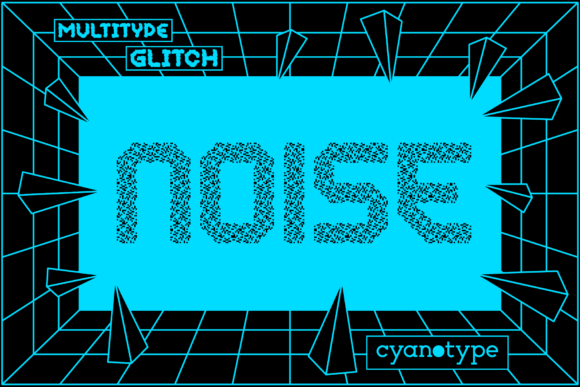
To understand the value of MultiType Glitch Noise, one must first appreciate the aesthetic it emulates. The font is designed to mimic the visual artifacts associated with digital signal errors, corrupted data streams, and analog television static. Unlike traditional glitch art which often relies on complex software manipulation, this typeface encapsulates that chaotic energy within the letterforms themselves. It is a cool, uniquely shaped, pixelated display font that captures the essence of technological failure as a stylistic choice rather than a mistake.
The visual language of MultiType Glitch Noise is rooted in the low-resolution aesthetics of early computing and gaming. However, it elevates this concept by introducing irregularities that feel organic yet controlled. Each character is constructed with a jagged, fragmented precision that suggests movement and instability. This makes it particularly effective for headlines, logos, and promotional materials where immediate visual impact is required. The font does not merely sit on the page; it vibrates with a distorted and trendy touch that demands attention.
Technical Specifications and Accessibility
One of the most significant advantages of using MultiType Glitch Noise in professional projects is its encoding structure. The font is PUA encoded, which stands for Private Use Area. In the Unicode standard, the PUA is a section reserved for characters that do not have assigned code points. For designers, this means that all glyphs and swashes can be accessed with ease, bypassing the limitations of standard character sets.
- Complete Glyph Access: Because it utilizes the PUA, users are not restricted to the basic alphanumeric set. Every variation, artifact, and decorative element included in the font file is accessible directly through the keyboard or font selection menu.
- Swash Integration: The font includes numerous swashes—ornamental variants of standard letters—that enhance the glitch aesthetic. These allow for greater typographic hierarchy and visual interest without needing external graphic elements.
- Compatibility: While PUA encoding requires specific handling in some legacy systems, it is fully supported in modern design software such as Adobe Creative Cloud, Sketch, Figma, and Affinity Suite. This ensures that the font renders correctly across print and digital mediums.
Applications in Modern Design Workflows
The versatility of MultiType Glitch Noise extends across various disciplines, from web development to physical branding. Its ability to convey a sense of digital disruption makes it suitable for industries that want to position themselves at the cutting edge of technology or those drawing inspiration from cyberpunk and vaporwave cultures.
Web Design and User Interface Elements
In web design, typography plays a crucial role in setting the tone of a website. Using a standard font for a hero section might fail to capture the imagination of a tech-savvy audience. By incorporating MultiType Glitch Noise into headers, navigation bars, or call-to-action buttons, designers can create a memorable user experience. However, caution is advised regarding body text. Due to its pixelated and fragmented nature, this font is best used for short bursts of text rather than long-form reading material.
Consider a landing page for a cybersecurity firm or a video game release. The erratic shapes of the letters in MultiType Glitch Noise can visually represent the complexity and volatility of the subject matter. When paired with dark backgrounds and neon accent colors, the font enhances the immersive quality of the interface.
Print Media and Album Art
Despite the dominance of digital media, print remains a powerful medium for tactile engagement. MultiType Glitch Noise excels in high-contrast print environments. Think of concert posters for electronic music festivals, album covers for synth-wave artists, or flyers for underground events. The font’s distressed look complements the gritty, raw energy often associated with these genres.
Furthermore, the font’s pixelated structure holds up well when scaled up for large format printing. The individual pixels become part of the texture, adding a layer of depth that smooth vector fonts lack. This makes it an excellent choice for merchandise such as t-shirts, stickers, and tote bags, where the brand identity needs to be bold and recognizable from a distance.
Psychological Impact and Brand Perception
Typography is not just about communication; it is about emotion. The choice of font influences how a message is perceived before the words are even read. MultiType Glitch Noise evokes feelings of nostalgia, rebellion, and innovation. It taps into the collective memory of early computer graphics while simultaneously suggesting a futuristic, dystopian narrative.
For brands aiming to appear edgy, unconventional, or technologically advanced, this font serves as a strong visual cue. It signals to the viewer that the brand is willing to experiment and break traditional rules. This is particularly relevant for startups in the tech sector, creative agencies, and entertainment companies. By adopting a typeface that embodies "glitch," these organizations align themselves with concepts of adaptability and resilience in the face of digital chaos.
Avoiding Overuse and Cliché
While the appeal of glitch aesthetics is strong, there is a risk of overusing the style, leading to visual fatigue. The key to effective implementation lies in restraint. MultiType Glitch Noise should be used as a highlighter, not a blanket. Pairing it with clean, minimalist sans-serif fonts can create a striking contrast that draws the eye to the most important information.
For example, a business card might feature the company name in MultiType Glitch Noise to grab attention, while the contact details remain in a simple, legible font. This balance ensures that the design remains functional while still delivering a strong stylistic statement. Educators and researchers can also use this approach when creating presentations, using the font for slide titles to emphasize key topics without compromising the readability of the supporting data.
Implementation Best Practices
To get the most out of MultiType Glitch Noise, designers should follow a few best practices to ensure optimal rendering and impact.
- Contrast is Key: Ensure that the background color provides sufficient contrast against the font. Since the font features gaps and fragments, low contrast can make the text illegible. Black text on white, or white text on black, works best.
- Spacing and Kerning: Pixelated fonts often require adjusted spacing to maintain their intended shape. Experiment with letter-spacing (tracking) to prevent the glitches from merging together unintentionally. Tighter tracking can enhance the chaotic effect, while wider spacing can improve readability.
- Contextual Relevance: Always consider the context of the message. MultiType Glitch Noise may not be appropriate for formal documents, legal contracts, or healthcare communications where clarity and trust are paramount. Reserve it for contexts where creativity and disruption are desired.
- Testing Across Devices: Although the font is PUA encoded, always test how it appears on different screens and resolutions. Some devices may render pixelated fonts differently depending on their anti-aliasing settings. Ensure that the glitch effect remains consistent and intentional across all platforms.
The Future of Display Typography
As digital culture continues to evolve, so too will the tools we use to express ourselves online. The rise of AI-generated content and standardized design systems has led to a desire for more human, imperfect, and distinctive visual elements. Fonts like MultiType Glitch Noise represent a counter-movement to this uniformity, celebrating the beauty of error and the uniqueness of digital artifacts.
Looking ahead, we can expect to see a continued blending of retro and futuristic aesthetics in typography. The glitch genre is likely to expand, incorporating new technologies such as variable fonts and dynamic animations. MultiType Glitch Noise, with its robust glyph set and flexible encoding, is well-positioned to adapt to these changes. Designers who master the use of such specialized fonts today will be better equipped to create standout visuals in tomorrow’s crowded digital landscape.
Conclusion
MultiType Glitch Noise is more than just a font; it is a design tool that offers a unique way to communicate complexity, nostalgia, and digital identity. Its PUA encoding ensures accessibility to all its intricate glyphs, while its pixelated aesthetic provides a versatile solution for a wide range of creative projects. Whether you are designing a website, printing a poster, or developing a brand identity, incorporating this font can add a layer of depth and intrigue that standard typefaces simply cannot achieve. By understanding its characteristics and applying it with strategic intent, creators can harness the power of digital distortion to produce work that is both visually stunning and functionally effective.